


 How to Win Hyperscaler Marketplaces
 Create a ROI-Driving Partner Experience
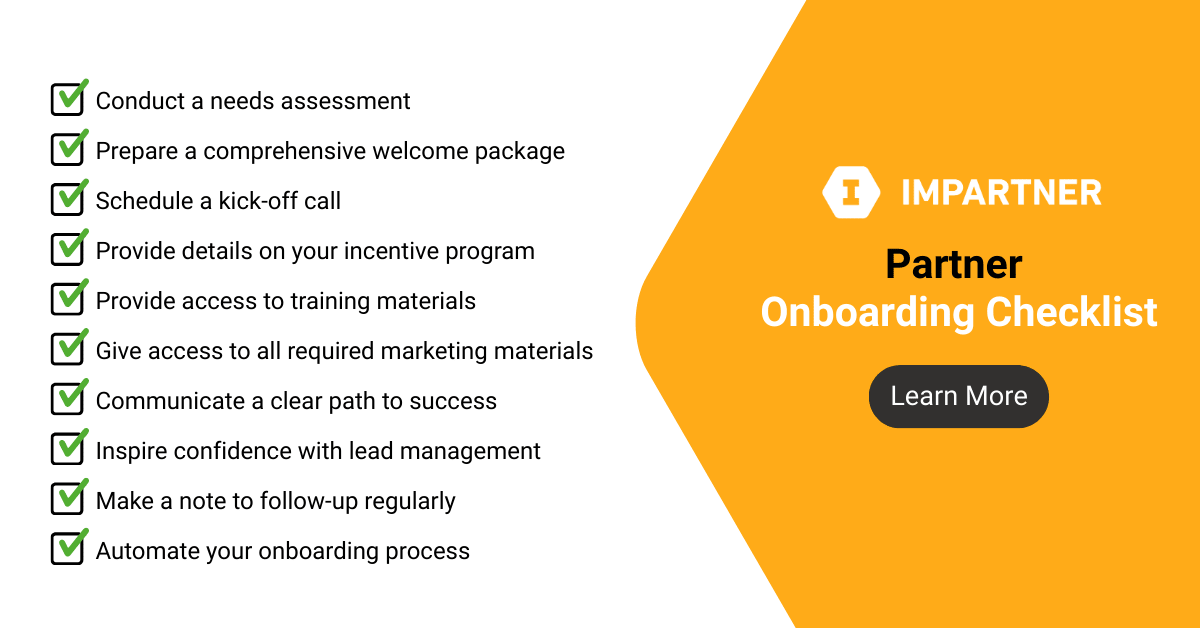
Partner Onboarding Checklist: 10 Things to Do When Onboarding New Partners
Not sure if you’re doing everything you should to create a superior onboarding process for new partners? Here’s a partner onboarding checklist you can use to make sure you’re doing everything possible to set your partners up for success.
Partner business models continue to evolve, with increased competition for partner mindshare. Many partners sell a broad range of products and work with multiple vendors. To support this shift, partner teams need clear strategy, reliable systems, and consistent processes that support a strong partner experience.
A superior product alone is not enough if partners do not feel they are benefitting from the partnership. The partner onboarding process is one of the biggest opportunities to set the tone for a successful relationship and support partner revenue orchestration.
Your partner onboarding checklist starts here. Need more help? Contact Impartner today to learn how our platform can help with your partner relationship needs.
1. Conduct a Needs assessment
The best partner onboarding process starts even before a partner signs on. When possible, assessing a partner’s needs and goals can be key to understanding what they hope to achieve from the relationship. A needs assessment ensures their focus is clear and aligned with business goals.
For organizations with large partner volumes, it may be impractical to run this with every partner. In those cases, using another method to gather preliminary information during signup helps segment partners into the right groups and begin personalizing their journeys even before they log into the partner platform for the first time.
Why this matters
Clear alignment early prevents misfit partnerships and ensures onboarding journeys support revenue contribution, not just activation.
2. Prepare a comprehensive welcome package
This helps create a strong first impression from the start. Using available information, prepare a comprehensive welcome package that includes everything a partner needs to get started quickly.
A good practice would be to have a standard welcome package that every partner gets, and when required, it can be customized from there. Some of the items that can be included in a standard welcome package are instructions for how to use the platform, relevant product guides, partner success contact details, and more.
Why this matters
A clear starting point reduces early friction and shortens time to first action.
Learn more: Read Partner Onboarding Best Practices for a Successful Channel Program to get more tips for partner onboarding.
3. Schedule a kick-off call
Introductory calls are an important part of onboarding new partners and another opportunity to show partners that they are a valuable part of the business. Walking partners through the platform and letting them see it in action allows them to get comfortable faster, which means they can start selling sooner.
Doing a walk-through also gives the opportunity to check in and see if further customizations are needed, show where to find product information and other materials, and answer any questions that may come up.
Why this matters
Early alignment improves adoption and reduces downstream rework.
Learn more: Use the Impartner platform to help automate this process. Partners can learn how to use the platform faster, without having to sit through a call.
4. Provide details on your incentive program
Details on incentive programs can be shared during the kick-off call and/or included in the welcome package, or within the partner platform. What matters most is that partners are informed and have easy access to this information.
If partners are expected to be active on the platform early on, incentives for achieving onboarding milestones can help. This can motivate partners to learn how to navigate the platform and ultimately stay more engaged.
Why this matters
Incentive clarity and visibility increases activation and sustained participation.
5. Provide access to training materials
Putting together a partner onboarding checklist? Don’t forget the training itself!
The partner platform should have easily accessible information and resources that help partners learn about the company and products. When armed with more comprehensive product details, partners can communicate with customers more effectively and ultimately sell more. This translates to higher product engagement and increased partner loyalty.
Why this matters
Well-trained partners execute more effectively and convert opportunities faster.
Find out more: Use Impartner’s Training & Certification features to fully customize and personalize training programs for each partner.
6. Give access to all required marketing materials
Provide partners with all the resources they need to start selling right away. This includes access to marketing collateral, content templates, creative assets, and other information about the company and products.
Making it easy for partners to start selling and earning from the start helps them quickly see the value of joining the program. An easy way to do this is by setting up a content library, where partners can immediately access co-branded collateral. This allows partners to start sharing information while keeping all materials on brand.
Why this matters
Reducing friction around asset access shortens time to first campaign execution.
7. Communicate a clear path to success
Setting expectations and communicating them to partners can sometimes be tricky, but it’s important to do it at the start so as to ensure a successful long-term relationship.
In some cases, this should take place even before the partner signs up. Communication to partners can include information on how they can move up to the next tier bracket, ways to claim market development funds, as well as how these benefits can help ensure their success.
Why this matters
Partners prioritize activities that are clearly tied to performance and rewards.
Tip: Use Impartner’s Program Compliance Manager to easily segment partners into tiers and keep track of performance without manual administrative work.
8. Inspire confidence with lead management
When partners are ready, start routing leads to them. Providing leads shows a commitment to partner success, helps demonstrate value, and can increase partner engagement with the business.
Use Impartner’s Partner Locator to easily connect high-intent leads directly to partners. Communicate clearly how Partner Locator and seamless deal registration route leads to partners and ensure they receive credit for their work.
Why this matters
Clear lead routing and attribution build confidence and encourage partners to stay engaged and active.
9. Make a note to follow-up regularly
Partner onboarding is not a once-and-done activity. Ongoing check-ins help track partner performance and show how participation in the program can support continued business growth.
This is all part of ensuring a strong partner experience within the ecosystem, which can lead to greater trust, loyalty, and a long-term working relationship that supports revenue growth.
Why this matters
Consistent follow-up ensures partners stay aligned, supported, and productive beyond initial onboarding.
Tip: Level up your analytics so you can keep track of partner performance. Read 8 Ways Channel Sales Analytics Can Help Increase Your ROI to find out more.
10. Automate your onboarding process
A great partner onboarding process is key to increasing revenue from the program, but it can involve spreadsheets and manual task management. The good news is that it doesn’t have to be so challenging; having the right tools can make all the difference.
Why this matters
Automation enables teams to scale partner onboarding without adding administrative overhead, while ensuring every partner receives a consistent experience.
An easier way to manage partner onboarding
A partner onboarding checklist can only go so far. The Impartner platform is designed to help customize, personalize, and automate all parts of the partner journey from the beginning.
Learn more about how the Impartner platform can support partner revenue orchestration across onboarding, increase partner engagement, and support revenue growth.